What is a Landing Page? Your Complete Guide to Higher Conversions
Learn what landing pages are, how they differ from regular web pages, and why they're crucial for marketing success. Plus actionable tips to create high-converting pages.
📑Table of Contents
- 1What Makes a Landing Page Different from Other Web Pages
- 2Types of Landing Pages That Drive Results
- 3Essential Elements Every Landing Page Needs
- 4How Landing Pages Fit Into Your SEO Strategy
- 5Common Landing Page Mistakes That Kill Conversions
- 6Best Practices for Higher Converting Landing Pages
- 7Testing and Optimizing Your Landing Pages
- 8Measuring Landing Page Success
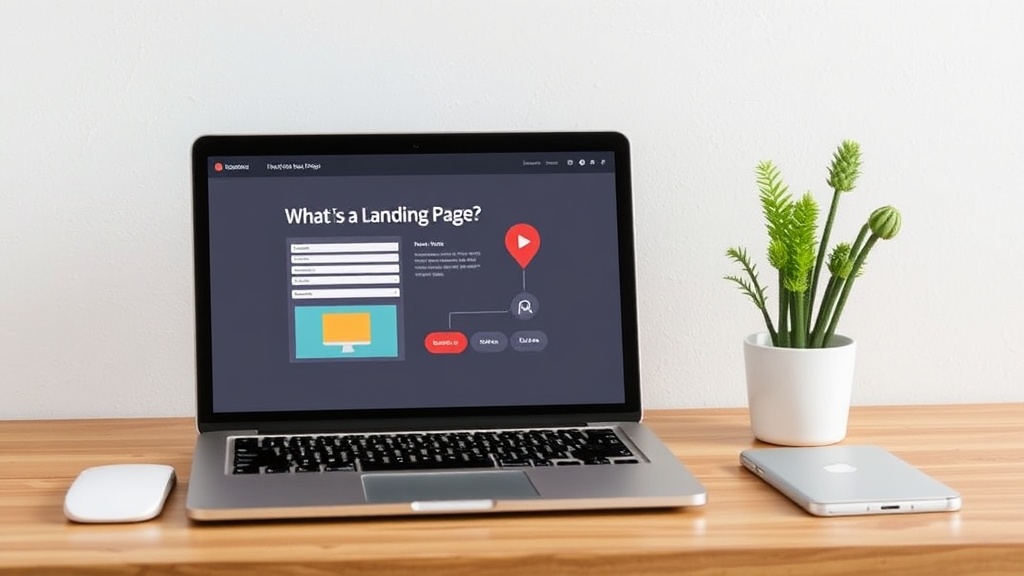
A landing page is a standalone web page created specifically for a marketing or advertising campaign. Unlike your homepage or other website pages, it serves one purpose: getting visitors to take a specific action.
Think of it as your digital salesperson—focused, persuasive, and designed to convert. When someone clicks on your Google ad, email link, or social media post, they "land" on this page. Hence the name.
But there's much more to landing pages than meets the eye. The difference between a good landing page and a great one can mean the difference between a 2% conversion rate and a 25% conversion rate. That's real money on the table.
What Makes a Landing Page Different from Other Web Pages
Regular website pages try to do everything at once. They have navigation menus, sidebars, multiple calls-to-action, and links going in every direction. Landing pages strip all that away.
A landing page follows the "one page, one goal" rule. Every element on the page—the headline, images, copy, and buttons—works toward getting the visitor to complete one specific action. That might be:
- Signing up for a newsletter
- Downloading a free guide
- Making a purchase
- Booking a consultation
- Registering for a webinar
This focused approach eliminates distractions. Visitors can't wander off to other parts of your site or get confused about what they should do next. They either convert or leave—there's no middle ground.
The psychology behind this is simple. When people have too many choices, they often choose nothing at all. Landing pages remove that decision paralysis by presenting one clear path forward.
Types of Landing Pages That Drive Results

Not all landing pages are created equal. Different campaigns need different approaches, and the type you choose depends on your goal and where visitors are coming from.
1. Lead Generation Landing Pages
These pages focus on collecting visitor information in exchange for something valuable. You're not asking for money—you're asking for contact details.
Lead gen pages typically offer:
- Free ebooks or whitepapers
- Email courses
- Webinar registrations
- Free trials
- Consultations
The form is usually short—just name and email address. The lower the barrier, the more people will convert.
2. Click-Through Landing Pages
These pages warm up visitors before sending them to make a purchase. They provide more information about a product or service and build desire before the final ask.
You'll often see these for:
- E-commerce products
- Software subscriptions
- High-ticket services
The goal isn't to collect information—it's to get people excited enough to click through to the purchase page.
3. Squeeze Pages
These are ultra-focused lead generation pages with minimal design. Just a headline, brief copy, and a form. They're called "squeeze" pages because they squeeze contact information out of visitors.
While they might look basic, squeeze pages can be incredibly effective when the offer is strong enough.
Pro Tip: Test squeeze pages against more detailed landing pages. Sometimes less really is more, but you won't know until you test with your specific audience.4. Sales Landing Pages
These pages are designed to make a direct sale. They include detailed product information, pricing, testimonials, and multiple purchase buttons.
Sales pages are typically longer because you need to address objections and build trust before asking for money. They might include:
- Product demonstrations
- Customer testimonials
- Money-back guarantees
- Detailed feature lists
- Pricing options
5. Thank You Pages
Often overlooked, thank you pages appear after someone completes your desired action. They confirm the conversion and can set up the next step in your funnel.
Smart marketers use thank you pages to:
- Provide next steps
- Offer additional products
- Encourage social sharing
- Collect feedback
Essential Elements Every Landing Page Needs
A high-converting landing page isn't just about pretty design. It's about including the right elements in the right order to guide visitors toward your goal.
1. Compelling Headline
Your headline is the first thing visitors see, and it determines whether they stay or leave within seconds. A good headline clearly communicates your value proposition and matches the expectation set by whatever brought them to the page.
If someone clicks on an ad about "Free SEO Audit," your landing page headline should mention that free SEO audit—not your company history or general marketing services.
2. Supporting Subheadline
The subheadline gives you space to elaborate on your main promise. Use it to add detail, address common concerns, or create urgency.
3. Clear Value Proposition
Visitors need to understand what they're getting and why they should want it. This isn't the place for clever wordplay or corporate jargon. Be direct about the benefits they'll receive.
4. Relevant Visuals
Images and videos should support your message, not distract from it. Product shots, demonstration videos, or images of happy customers work well. Avoid generic stock photos that add no value.
5. Social Proof
People want to know others have had success with your offer. Include:
- Customer testimonials
- Review counts and ratings
- Company logos (if you've worked with well-known brands)
- User-generated content
6. Clear Call-to-Action
Your CTA button should stand out visually and use action-oriented text. "Get My Free Guide" works better than "Submit." The button should be above the fold and repeated if the page is long.
7. Minimal Form Fields
Only ask for information you actually need. Each additional form field reduces conversion rates. If you only need an email address to deliver value, don't ask for phone numbers and company size.
Pro Tip: Use progressive profiling to collect more information over time. Start with just email, then ask for more details in follow-up interactions.How Landing Pages Fit Into Your SEO Strategy
Landing pages play a unique role in SEO. While they're primarily designed for paid traffic, they can also drive organic search results when optimized properly.
The key is understanding search intent. People searching for "best project management software" are in research mode. They're not ready to sign up for your tool yet—they want to compare options.
But someone searching for "Asana free trial" has much higher intent. They've already done their research and are ready to test your product. That's perfect landing page traffic.
When optimizing landing pages for SEO, focus on:
- Long-tail keywords with commercial intent
- Local search terms if you serve specific geographic areas
- Brand-related searches
- Solution-specific queries
Don't try to rank landing pages for broad, competitive terms. Use your main website pages for those. Landing pages work best for specific, high-intent queries where visitors are ready to take action.
The relationship between landing pages and your broader SEO strategy is symbiotic. Your main site pages can drive awareness and rank for informational queries, while landing pages convert that awareness into leads and sales.
For more insights on building a complete SEO strategy, check out our essential SEO tools guide to see how landing pages fit into the bigger picture.
Common Landing Page Mistakes That Kill Conversions
Even experienced marketers make landing page mistakes that tank their conversion rates. Here are the most common ones and how to avoid them.
1. Too Many Options
The fastest way to kill conversions is giving visitors too many choices. Multiple CTAs, navigation menus, and sidebar links all compete for attention.
Stick to one clear path. If you absolutely must include navigation, make it minimal and less prominent than your main CTA.
2. Headline-Traffic Mismatch
If your Google ad promises a "Free Marketing Audit" but your landing page headline says "Grow Your Business Today," you've created a disconnect. Visitors will feel confused and bounce.
Your headline should match the expectation created by whatever drove traffic to the page.
3. Asking for Too Much Information
Every form field is a potential barrier. Ask yourself: Do I really need their company size to deliver the promised value? What about their phone number?
Start with the minimum information needed, then collect more details later in your relationship.
4. Weak Value Proposition
"Sign up for our newsletter" isn't compelling. "Get weekly marketing tips that helped 500+ businesses double their leads" is much stronger.
Be specific about the value you're providing and the results people can expect.
5. Missing Social Proof
People are naturally skeptical of online offers. Without testimonials, reviews, or other forms of social proof, you're asking them to take a leap of faith most won't take.
Include real customer names, photos when possible, and specific results they achieved.
6. Slow Loading Speed
A delay of just one second can reduce conversions by 7%. Mobile visitors are even less patient.
Optimize images, minimize plugins, and use a fast hosting provider. Test your page speed regularly and fix any issues immediately.
7. Poor Mobile Experience
More than half of all web traffic comes from mobile devices. If your landing page doesn't work well on phones and tablets, you're losing money.
Test your pages on multiple devices and screen sizes. Make sure forms are easy to fill out on mobile and buttons are large enough to tap easily.
Best Practices for Higher Converting Landing Pages
Creating landing pages that actually convert requires attention to both big-picture strategy and small details. Here are the practices that separate high-performing pages from mediocre ones.
1. Match Message to Market
Your landing page message should align perfectly with three things: your traffic source, your target audience, and your offer. If any of these don't match, conversions suffer.
Someone clicking on a Facebook ad about productivity tips expects different content than someone searching for "time tracking software." Tailor your message accordingly.
2. Use Urgency and Scarcity Wisely
Limited-time offers and exclusive deals can boost conversions, but only if they're genuine. Fake countdown timers and artificial scarcity damage trust and hurt long-term results.
Real urgency might include:
- Actual limited quantities
- Time-sensitive bonuses
- Seasonal promotions
- Event registrations with real deadlines
3. Test Above the Fold Elements
The "fold" refers to what visitors see before scrolling. This area gets the most attention, so test different versions of your:
- Headlines
- Subheadlines
- Hero images
- CTA buttons
Small changes in these elements can create big differences in conversion rates.
4. Create Scannable Content
Most visitors won't read every word on your page. They scan for key information. Make this easy with:
- Short paragraphs
- Bullet points
- Bold text for key benefits
- White space to break up content
5. Address Common Objections
Think about why someone might hesitate to take your desired action, then address those concerns directly on the page. Common objections include:
- Price concerns
- Trust issues
- Feature questions
- Time commitments
Testing and Optimizing Your Landing Pages
The best landing page designers in the world can't predict what will work for your specific audience. That's why testing is so important.
A/B testing lets you compare different versions of your page to see which performs better. You might test:
- Different headlines
- Various CTA button colors
- Long vs. short copy
- Different form lengths
- Various images or videos
Start with the elements that typically have the biggest impact: headlines, value propositions, and call-to-action buttons. Once you've optimized these major elements, you can test smaller details.
Always test one element at a time. If you change the headline AND the button color AND the image simultaneously, you won't know which change caused any difference in performance.
Run tests long enough to get statistically significant results. This usually means at least 100 conversions per variation, though more is better for confidence in your results.
Tools like ContentFrog's AI-powered content creation platform can help you generate multiple variations of headlines, copy, and CTAs to test, speeding up your optimization process.
Measuring Landing Page Success
Conversion rate is the obvious metric for landing page success, but it's not the only one that matters. Here's what to track:
Primary Metrics
- Conversion Rate: The percentage of visitors who complete your desired action
- Cost Per Conversion: How much you spend in advertising to get each conversion
- Return on Ad Spend (ROAS): The revenue generated for every dollar spent on advertising
Secondary Metrics
- Time on Page: How long visitors stay before converting or leaving
- Bounce Rate: The percentage of visitors who leave without taking any action
- Form Abandonment Rate: How many people start filling out your form but don't finish
- Click-Through Rate: For click-through landing pages, how many visitors continue to the next step
Quality Metrics
- Lead Quality: Not all leads are equal—track which landing pages generate the best customers
- Customer Lifetime Value: Some pages might have lower conversion rates but attract more valuable customers
- Email Engagement: For lead generation pages, track how engaged your new subscribers are
Remember that optimization is an ongoing process. What works today might not work next month as your audience, market, or competition changes. Keep testing and refining your pages regularly.
Landing pages are one of the most powerful tools in digital marketing when done right. They turn traffic into leads, leads into customers, and good campaigns into great ones. Master the basics covered here, then keep testing and improving—your conversion rates will thank you.
For more advanced marketing strategies and tools to improve your landing page performance, explore our comprehensive marketing resources and discover how AI can transform your content creation process.
🐸 Want to create content like this?
ContentFrog generates SEO-optimized articles in minutes, not hours. Start with 3 free articles today.
Start Free TrialReady to create amazing content?
Try ContentFrog and generate SEO-optimized articles in minutes.
Get Started Free →